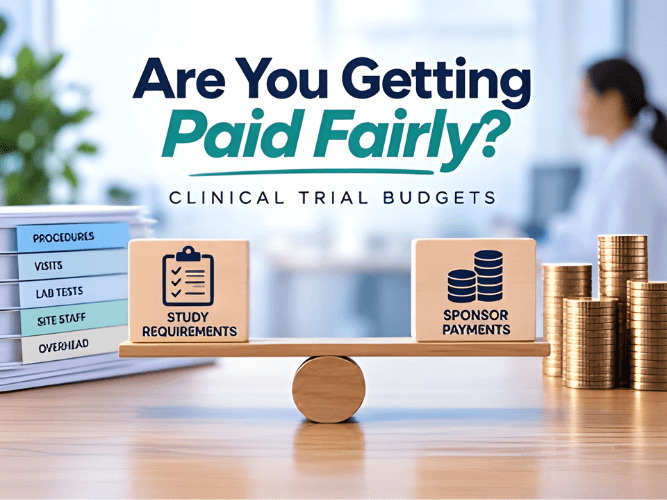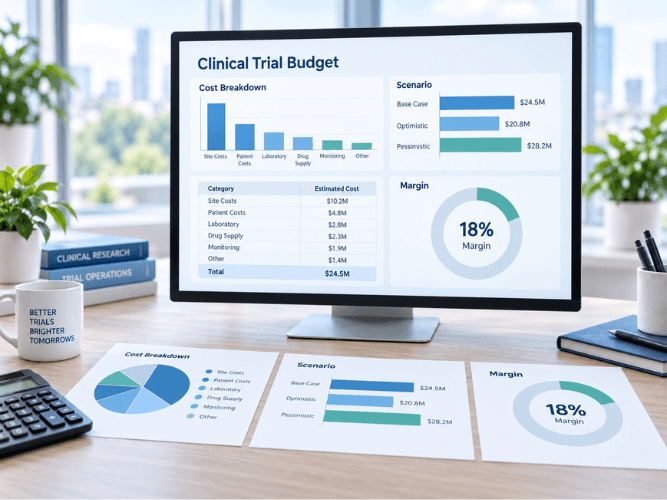

Your clinical research site may have already earned revenue that has never been collected. The problem is often not the sponsor budget.
It is invoicing.
Clinical trial agreements frequently contain dozens of separately invoiceable activities. If those activities are performed but never identified, documented, invoiced, and followed through to payment, the site can quietly lose significant revenue.
Understand What Is Invoiceable
Every executed clinical trial agreement and budget should be reviewed to identify activities requiring manual invoicing.
Depending on the study, these may include start-up fees, screen failures, unscheduled visits, pharmacy fees, protocol amendments, monitoring visits, close-out activities, storage, re-consenting, safety reporting, travel reimbursement, equipment-related fees, and other administrative activities.
The exact items vary by contract.
Your finance process should therefore begin with the final executed agreement - not a generic invoicing checklist.
Build the Financial Terms Into Your Workflow
Once a trial is awarded, the financial terms should be translated into an operational tracking system.
Whether your organization uses a CTMS, financial tracker, or another platform, staff should know:
what triggers an invoice, how much should be billed, what documentation is required, when the invoice should be submitted, and when payment is expected.
If this information lives only inside a contract PDF, revenue can easily be missed.
**Don't Depend Entirely on Sponsor-Generated Payments ** Some study payments are generated automatically from electronic data capture or patient visits. Others are not.
Sites should understand which revenue will be paid automatically and which activities require the site to initiate an invoice.
Assuming the sponsor will identify every earned payment creates financial risk.
**Reconcile Invoices With Payments ** Sending an invoice is only the beginning.
The site should track whether the invoice was received, processed, paid correctly, and applied to the correct study and activity.
Short payments, duplicate payments, unidentified deposits, missing payments, and incorrectly applied payments are common financial management challenges.
Regular reconciliation helps identify these issues early.
Establish an Accounts Receivable Process
Outstanding invoices should not simply remain on a spreadsheet.
Your organization should have a defined follow-up process based on invoice aging.
The longer an invoice remains unresolved, the more difficult collection can become.
Leadership should have visibility into total outstanding receivables, aging by sponsor or study, unresolved discrepancies, and expected collections.
Invoicing Is a Revenue Function
Clinical trial invoicing should not be treated as an administrative afterthought.
It is a core revenue-cycle function.
A strong process connects the contract, CTMS, clinical activity, invoice, payment, and reconciliation into one financial workflow.
When those pieces are connected, leadership gains a much clearer understanding of what the organization has earned and what remains outstanding. ** Elevate Research Finance helps sites establish invoicing workflows, identify missed invoiceable items, reconcile sponsor payments, and manage clinical trial accounts receivable.
Want to know whether revenue is slipping through the cracks at your site? Schedule a free discovery consultation with Elevate.**